How to Choose the Right Temperature and Pressure Relief Valve for Your System?
Choosing the right temperature and pressure relief valve is critical for system safety. According to industry reports, improper selection can lead to equipment damage and safety hazards. The American Society of Mechanical Engineers (ASME) states that up to 70% of pressure relief valve failures are due to mismatched specifications.
When selecting these valves, considering the specific operating conditions is essential. The required pressure and temperature ratings should align with system demands. Many industry professionals overlook the significance of proper sizing. This oversight can have dire consequences, including system inefficiencies and potential accidents.
Furthermore, regular maintenance should not be underestimated. A study by the National Board of Boiler and Pressure Vessel Inspectors found that inadequate maintenance is a common factor in valve malfunctions. Evaluating your existing setup and making necessary adjustments is crucial for maintaining safety and performance. Taking these factors into account will improve overall system reliability.
Understanding the Role of Temperature and Pressure Relief Valves in Systems
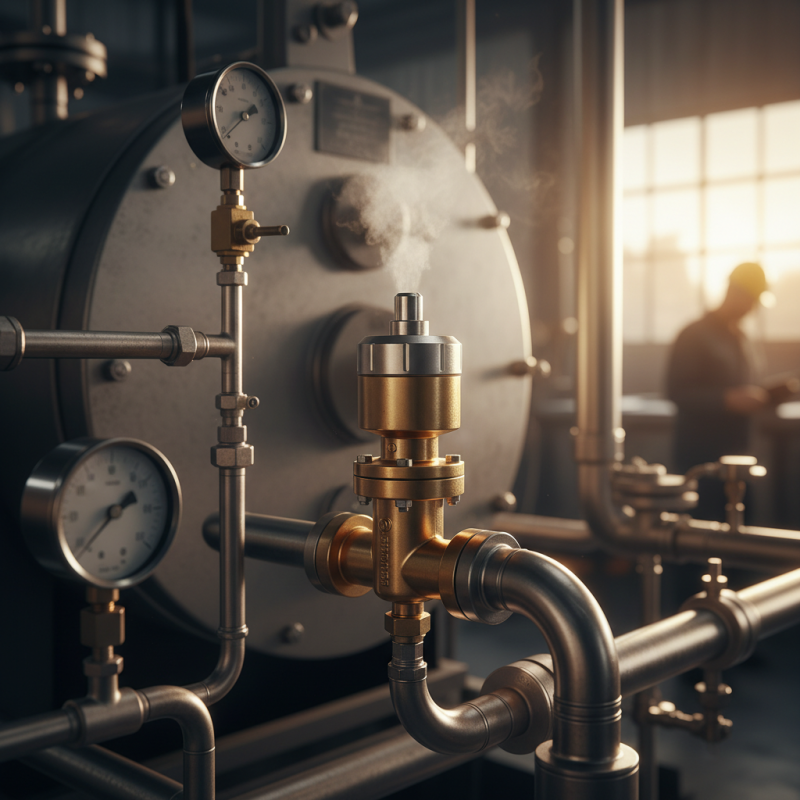
Temperature and pressure relief valves play a critical role in various industrial systems. They are designed to prevent overpressure and overheating, protecting equipment and personnel. According to industry statistics, more than 70% of pressure-related failures occur in systems lacking proper relief mechanisms. This highlights the importance of selecting the right valve for specific applications.
The performance of these valves directly impacts system safety and efficiency. It is reported that an estimated 30% of industrial accidents can be traced back to improper relief valve operation. Choosing a valve with the correct specifications is vital. This includes understanding the temperature and pressure requirements of your system. In many instances, operators underestimate the need for regular maintenance. A valve stuck in the closed position can lead to catastrophic failures.
Monitoring the conditions under which these valves operate is essential. Some installations fail to account for factors like vibration and corrosion. Ignoring these details can compromise valve functionality. Data from safety audits indicate that regularly tested valves can reduce accident rates by up to 50%. Thus, ongoing evaluation and adjustment of these components are crucial in maintaining system integrity.
Identifying Key Factors for Selecting the Right Valve Specifications
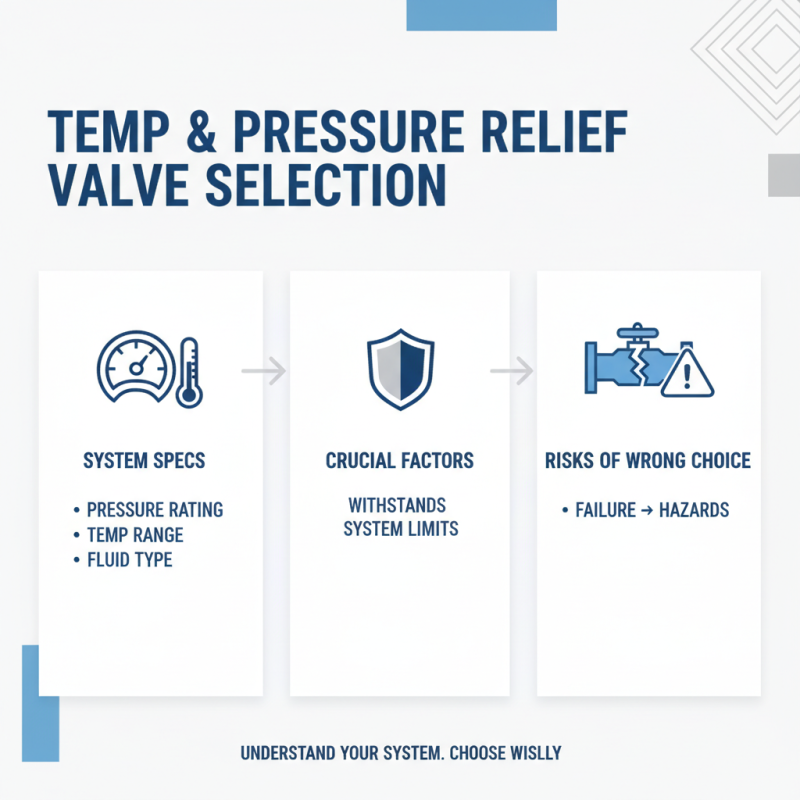
Selecting the appropriate temperature and pressure relief valve begins with understanding your system's specifications. Factors such as system pressure, temperature range, and fluid type play a crucial role. A valve must withstand the specific pressure and temperature levels. For instance, a valve rated too low can fail, leading to significant hazards.
Material compatibility is another essential aspect. Not all materials perform well under high temperatures or corrosive environments. A valve made from the wrong material can degrade quickly. Regular maintenance checks are vital to prevent unforeseen failures. Monitoring the valve condition is key but often overlooked.
Finally, installation practices also influence performance. Uneven installation can lead to leaks. Misalignments or improper sealing weaken the system. Investing time in proper setup will pay off in safety and reliability. Remember, the right choice today can prevent costly mistakes tomorrow.
Evaluating Pressure Ratings and Temperature Ranges for Optimal Performance
Choosing the right temperature and pressure relief valve can be challenging. It's crucial to understand the specific requirements of your system. Evaluating pressure ratings is fundamental. A valve's rating must match or exceed the maximum pressure in your system. Many overlook this detail. Using an incorrectly rated valve can lead to catastrophic failures.
Temperature ranges are equally important. Each valve has a specified range. Operating outside this range can compromise the valve's effectiveness. For instance, valves exposed to high temperatures may fail to open properly, causing dangerous pressure buildup. It's essential to consult the specifications thoroughly. Sometimes, users assume that "one-size-fits-all" applies, which can be misleading.
Incorrect selections often stem from a lack of information. This may lead to system inefficiencies and even accidents. Users may not regularly check their equipment. This oversight could result in outdated valves not meeting current demands. Instead of quickly choosing a valve, take time to assess your system's unique needs. Making informed decisions now can prevent significant issues later.
How to Choose the Right Temperature and Pressure Relief Valve for Your System?
| Valve Type |
Pressure Rating (psi) |
Temperature Range (°F) |
Materials |
Applications |
| Spring Loaded |
30 - 150 |
32 - 250 |
Steel, Stainless Steel |
Water, Steam |
| Pilot Operated |
100 - 300 |
-20 - 375 |
Bronze, Aluminum |
Oil, Gas |
| Thermal Relief |
25 - 250 |
0 - 300 |
CPVC, PVC |
Chemical Processing |
| Safety Relief Valve |
150 - 600 |
-40 - 450 |
Stainless Steel, Alloy |
Air, Refrigerants |
Assessing Material Compatibility with System Fluids and Conditions
Choosing the right temperature and pressure relief valve hinges on understanding material compatibility with system fluids. Different materials react differently to various fluids. High corrosion risks can arise from improper material choices. For instance, certain steel grades may not withstand aggressive chemicals, leading to premature failures.
A study found that over 30% of valve failures were due to material incompatibility. Engineers must assess not only temperature and pressure ratings but also the specific fluids involved. This includes evaluating the chemical compatibility charts and understanding how a material might degrade over time. Even slight corrosion can lead to significant leakage.
It's crucial to consider not just the fluid composition but also the operating environment. High temperatures can exacerbate chemical reactions, affecting valve longevity. Regularly reviewing maintenance reports can highlight recurring issues, signaling potential material compatibility problems. Ignoring these factors may lead to costly downtimes and safety hazards. Continuous improvement in material selection is essential for a reliable system.
Common Industry Standards and Guidelines for Relief Valve Selection
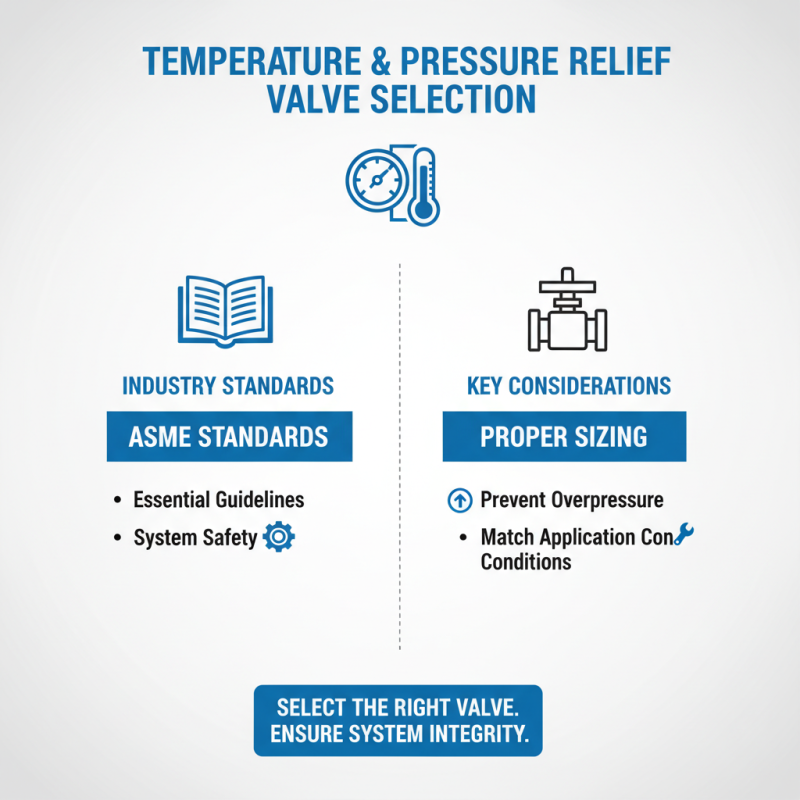
When selecting a temperature and pressure relief valve, several industry standards and guidelines come into play. The American Society of Mechanical Engineers (ASME) outlines essential standards for these valves. It emphasizes the importance of proper sizing to prevent system overpressure. The correct valve must withstand the specific conditions found in your application.
Another key aspect is the valve's discharge capacity. It should align with your system’s requirements. It’s a common oversight to assume that any valve will work for all applications. In reality, each system has unique specifications that dictate the suitable valve choice. Engineers must examine these details closely. Failure to adhere to guidelines can result in safety hazards.
Additionally, testing and maintenance play critical roles. Valves should undergo regular inspections to ensure proper operation. Some companies neglect this, leading to potential failures. Industry standards stress the importance of documentation as well. Without adequate records, tracking valve performance becomes challenging. Consider these factors carefully for a safer system.
 North American Safety Valve Industries, Inc.