 North American Safety Valve Industries, Inc.North American Safety Valve Industries, Inc.North American Safety Valve Industries, Inc.
China’s Smt Assembly market is broad, capable, and difficult to compare from sales claims alone. This 2026 guide introduces ten manufacturers serving different production needs, from rapid prototypes to high-volume electronics. The goal is not to declare one factory best for every buyer. It is to show what deserves closer inspection.
A useful perspective comes from Dr. Jennie S. Hwang, an electronics-manufacturing expert. In paraphrase, her process-focused message is: “Reliable products begin with controlled materials, processes, and workmanship.” That principle matters on a real production floor. A fast placement machine is valuable, but it cannot compensate for weak solder-paste control or inconsistent inspection. Look for evidence: line capabilities, component traceability, reflow profiling, AOI coverage, and clear handling of engineering changes. Ask how a supplier manages first-article builds and recurring defects. Details matter.
The manufacturers in this overview should be compared against your product, volumes, and quality requirements—not just their websites. Some suppliers may excel at complex assemblies; others may offer better fit for stable, large runs. Verify certifications and capabilities directly, and request recent, relevant references where possible. A directory cannot replace a factory audit. Nor can a polished brochure prove consistent execution. That is an imperfect limitation of any ranking, and worth remembering before you commit.
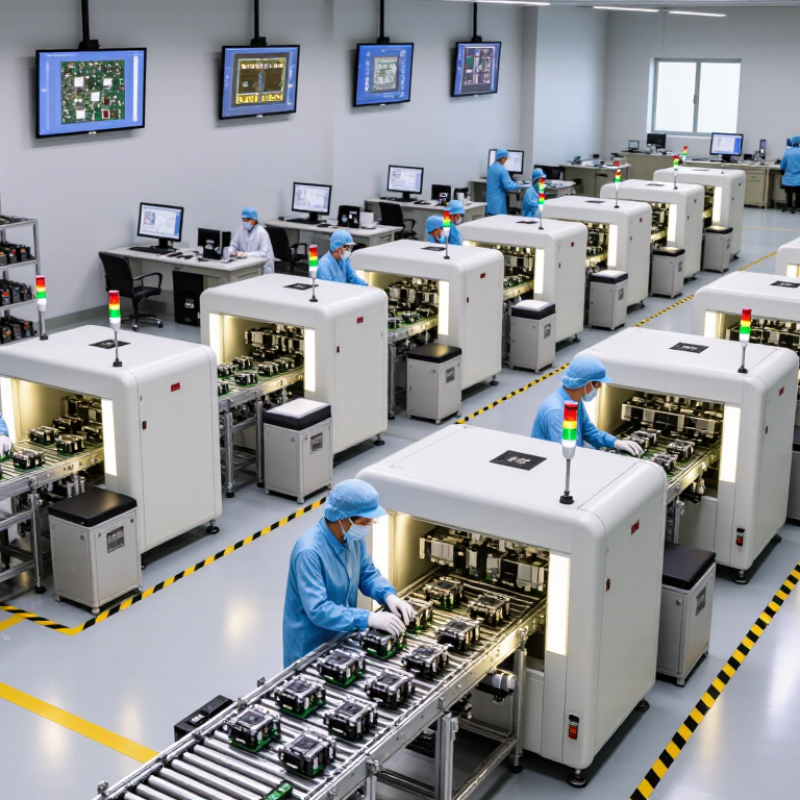
SMT assembly manufacturers place electronic components directly onto printed circuit boards, then solder them in controlled production steps. Their work often begins with checking board files, component lists, and package specifications. A mismatch in polarity or footprint can stop a line before assembly starts. Good preparation saves rework later.
A typical process starts with solder paste applied through a stencil onto tiny board pads. A printer operator checks the deposit, sometimes using solder paste inspection equipment. Pick-and-place machines then position components, from small resistors to larger integrated circuits. The populated board passes through a reflow oven, where carefully managed heat melts the solder. Not always. Temperature profiles need adjustment for board thickness and component mix.
After soldering, automated optical inspection checks placement and visible joints. X-ray inspection may help assess hidden connections beneath certain packages. Technicians review defects, repair boards when appropriate, and record test results for traceability. Manufacturers may also advise on panel design, component spacing, and test access. Still, their recommendations are not automatically right for every product; engineers should review trade-offs against actual operating needs. A clean inspection report is reassuring, but it does not replace functional testing under realistic conditions.
Scope: This process-focused overview describes ten common SMT assembly operations and supplier responsibilities. It does not rank or identify individual companies; actual equipment, tolerances, and inspection plans vary by facility and product.
| Step | SMT Operation | What the Manufacturer Does | Typical Equipment or Controls | Output or Quality Check |
|---|---|---|---|---|
| 1 | Design-for-manufacturing review | Reviews the PCB layout, component library, polarity, package clearances, panelization, and assembly drawings before production. | Gerber or ODB++ data review, bill-of-material checks, stencil and panel design tools. | Resolved engineering questions, approved manufacturing data, and documented assembly instructions. |
| 2 | Material verification and preparation | Checks incoming PCBs and components against the bill of materials, manages lot traceability, and handles moisture-sensitive parts according to their requirements. | Receiving inspection, barcode tracking, dry cabinets, and controlled component storage. | Verified materials with traceable lot or date-code records; damaged or mismatched items are held for review. |
| 3 | Solder-paste printing | Applies solder paste through a stencil onto the PCB pads in the locations needed for surface-mount components. | Stencil printer, solder paste, stencil, and print setup controls such as alignment and squeegee parameters. | Paste deposits are checked for position, coverage, and volume, commonly using solder-paste inspection (SPI). |
| 4 | Component placement | Places surface-mount components onto the printed solder-paste deposits using programmed placement data. | Pick-and-place machines, feeders, vision systems, and verified component-orientation data. | Components are placed at the programmed locations and orientations; placement results can be reviewed by machine data and downstream inspection. |
| 5 | Reflow soldering | Heats the populated board using a controlled profile so the solder paste melts, forms joints, and cools. | Conveyor reflow oven with multiple heating zones; profile settings are selected for the solder alloy, PCB, and component limits. | Thermal profiling verifies that the board follows the required temperature profile. Lead-free SAC alloys commonly have peak temperatures around 235–250°C, subject to the solder-paste and component specifications. |
| 6 | Automated optical inspection | Inspects visible solder joints and component placement for defects such as missing, shifted, reversed, or incorrectly soldered parts. | 2D or 3D automated optical inspection (AOI) systems with product-specific inspection programs. | Suspect results are reviewed and classified; AOI does not directly inspect solder joints hidden beneath packages. |
| 7 | Hidden-joint inspection | Uses additional inspection where package construction or product risk makes hidden solder joints difficult to assess optically. | X-ray inspection, commonly used for packages such as ball grid arrays (BGAs) and some bottom-termination components. | Review of hidden-joint characteristics, such as bridging or voiding, against the applicable product acceptance criteria. |
| 8 | Through-hole and selective soldering | Fits and solders through-hole components when the design includes them, often after SMT reflow. | Manual soldering, wave soldering, or selective soldering equipment, chosen according to board design and production needs. | Inspection confirms component orientation, solder coverage, and compliance with the specified workmanship criteria. |
| 9 | Electrical and functional testing | Checks assembled boards for electrical opens or shorts and, when required, verifies operation against the product specification. | In-circuit test (ICT), flying-probe test, boundary-scan test, or a product-specific functional test fixture. | Recorded pass/fail results and repair or failure analysis for boards that do not meet test requirements. |
| 10 | Rework, final inspection, and shipment | Repairs approved defects, performs final checks, protects the assemblies for transport, and prepares production records. | ESD-controlled workstations, suitable rework tools, visual inspection, packaging, and traceability systems. | Assemblies are released according to the agreed acceptance criteria, with applicable inspection, test, and traceability records. |