
China remains a major source of Canned Lychee for supermarkets, foodservice companies, and ingredient distributors worldwide. However, choosing a reliable supplier involves more than comparing prices. Product consistency, can quality, factory experience, and export records matter greatly.
Dr. Michael Doyle, a respected food-safety specialist, has said, “Food safety is a shared responsibility.” This principle applies directly to canned fruit production. A dependable supplier should maintain documented HACCP procedures, clean processing areas, traceable raw materials, and regular quality inspections. Buyers should also review lychee variety, syrup concentration, fruit firmness, drained weight, and packaging specifications.
This guide examines leading Canned Lychee suppliers in China, particularly those operating in Guangdong, Fujian, and Hainan. These regions offer strong access to lychee-growing areas and established fruit-processing facilities. Factory visits can reveal practical details. Look for stainless-steel equipment, organized storage, intact cartons, and clear production records.
The market is not perfectly transparent. Some supplier claims require careful checking. A polished website proves little by itself. Samples, audit reports, certifications, and customer references provide stronger evidence. Small details matter, too. A dented can may signal weak handling. Uneven fruit color may indicate inconsistent processing.
The suppliers discussed here are assessed through product quality, production capability, certifications, customization options, and communication reliability. No ranking should be treated as permanent. Export performance and crop conditions can change each season. Therefore, buyers should confirm current information before placing large orders.
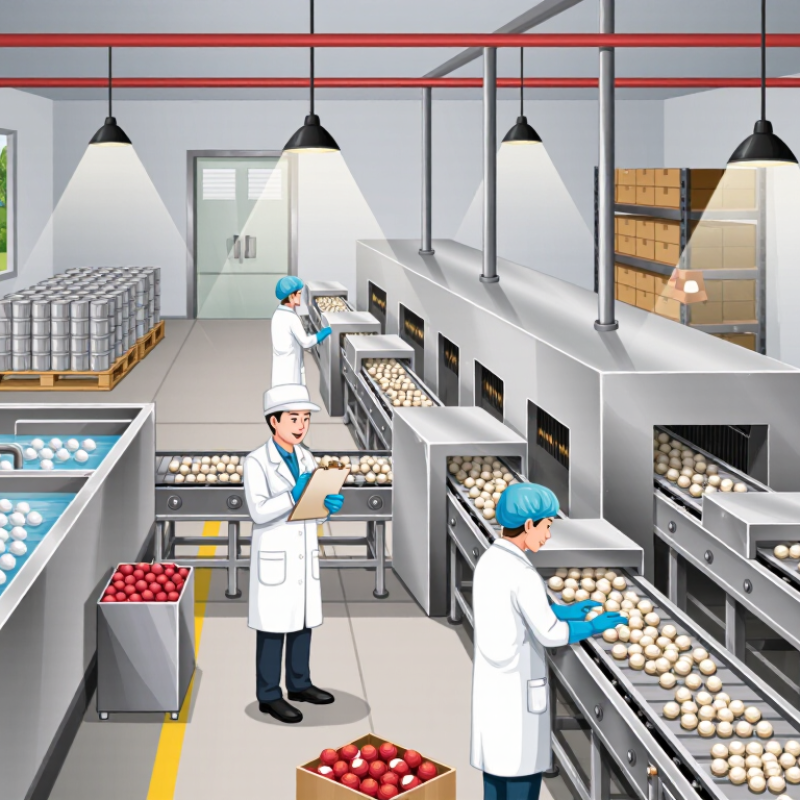
China’s leading position in canned lychees begins with raw-material scale. FAOSTAT crop data for 2022 place China’s lychee production at roughly 2.6 million metric tons. Guangdong, Guangxi, Fujian, and Hainan provide major growing areas. Short transport routes help move fruit from orchards to peeling and canning lines quickly. That matters. Fresh lychees lose firmness rapidly after harvest.
Processing capacity adds another advantage. China has mature canning clusters, stable access to tinplate cans, and established cold-chain services.
China Customs data and UN Comtrade records also place China among the world’s major exporters in the broader HS 200899 prepared-fruit category. However, this code includes several fruit products. It does not isolate canned lychees perfectly.
The data are not perfectly clean.
Reliable suppliers usually show more than low prices. They provide harvest records, batch traceability, ingredient specifications, and laboratory reports for microbiological and residue testing. Experienced buyers should inspect syrup clarity, fruit firmness, can weight, and seam integrity. A useful evaluation also checks factory hygiene, processing temperature controls, and export documentation. Supplier quality can vary. Even in established production regions, seasonal rain may affect sweetness, size, and yield. China remains a strong sourcing base because its farms, processors, packaging producers, and export logistics operate within a connected supply network. That network reduces handling time and supports consistent contract volumes.
Who Are the Top Canned Lychee Suppliers in China?
Key Regions Producing Canned Lychees in China
China remains the world’s leading lychee producer. FAOSTAT data shows that its annual lychee output has stayed near two million metric tons in recent years. However, fresh-fruit production and canning capacity are not evenly distributed. Guangdong is the most important processing region, especially around Maoming, Zhanjiang, and Huizhou. These areas combine dense orchards, ports, sugar suppliers, and established fruit-processing facilities.
Fujian is another significant source, with processing activity near Zhangzhou and Putian. Guangxi also deserves attention. Its Qinzhou, Yulin, and Beihai areas offer expanding orchards and practical access to southern shipping routes. Hainan supplies smaller volumes, but its early harvest season can support longer procurement windows. Regional figures vary by weather and reporting method. That limitation matters.
The China Statistical Yearbook and Ministry of Agriculture reports show strong production concentration in southern provinces. Buyers should still inspect each supplier’s actual factory location. A Guangdong trading office may source fruit elsewhere. Ask for harvest records, processing dates, Brix readings, can-seam checks, and HACCP or ISO documentation where applicable. The best suppliers usually provide batch traceability and transparent packing specifications. Not every large processor is consistent. A recent on-site audit remains more reliable than a polished website.
| Regional Supply Area | Key Producing Provinces or Cities | Major Lychee Varieties Used | Typical Fresh Harvest Period | Canned Lychee Product Strengths | Processing and Logistics Advantages | Indicative Supplier Position |
|---|---|---|---|---|---|---|
| Guangdong | Maoming, Zhanjiang, Guangzhou, Huizhou and surrounding areas | Nuomici Feizixiao Heiye | Approximately May to July, depending on location and variety | Strong availability of sweet, aromatic fruit suitable for peeled and pitted lychees in syrup; broad range of retail and foodservice can sizes | One of China’s largest lychee-producing bases, mature fruit-processing infrastructure, access to South China ports and established cold-chain networks | Leading regional source for large-volume canned lychee procurement |
| Fujian | Zhangzhou, Longhai, Pinghe and nearby coastal areas | Feizixiao Yuhebao Local early-season varieties | Approximately May to July | Consistent fruit grading, balanced sweetness and firm texture for whole, peeled and pitted canned products | Strong fruit-canning tradition, convenient access to Xiamen and other Fujian export gateways, and good connectivity with packaging suppliers | Important export-oriented processing region, especially for standardized canned formats |
| Guangxi | Yulin, Qinzhou, Lingshan and surrounding areas | Shui Jing Qiu Feizixiao Heiye | Approximately June to August | Competitive raw-material costs and suitable supply for lychees in light syrup, heavy syrup and mixed-fruit canned products | Large agricultural production base, proximity to Guangdong processing and access to Beibu Gulf logistics routes | Growing bulk-supply region with strong potential for cost-sensitive orders |
| Hainan | Qionghai, Wenchang, Haikou and other island production areas | Early-season varieties Feizixiao | Approximately March to May, earlier than most mainland production areas | Useful for early-season procurement and blending programs that extend the annual supply window | Tropical climate supports earlier harvests; island ports provide access to domestic and international shipping routes | Specialized supplementary source rather than the largest national canning cluster |
| Yunnan | Honghe, Yuxi and other southern production areas | Feizixiao Local early-season varieties | Approximately May to July, varying with altitude and local climate | Provides additional seasonal volume and variety options for processed fruit applications | Expanding tropical-fruit production base; inland logistics are commonly connected with processing and export hubs in southern China | Emerging supplementary source for processors seeking diversified raw-material supply |
The strongest canned lychee suppliers in China are concentrated in Guangdong, Fujian, and Guangxi. These regions offer close access to lychee orchards and experienced fruit-processing teams. Guangdong suppliers often provide flexible can sizes, private-label packing, and quick export coordination. Fujian processors are known for stable syrup texture and careful fruit grading. Guangxi suppliers benefit from abundant seasonal harvests and competitive bulk pricing.
Product strength starts with the fruit itself. Reliable suppliers sort lychees by size, firmness, color, and damaged-skin rate. Premium packs usually contain whole fruits with clean white flesh and a light, balanced syrup. Some factories offer 425-gram, 567-gram, and larger food-service cans. They may also adjust sweetness for retail, bakery, beverage, or dessert applications. I would request a physical sample, not only catalog photos. Photos can hide softness.
Quality control needs clear evidence. Ask for harvest records, batch traceability, metal detection procedures, and current food-safety certifications. A capable supplier should explain its blanching, peeling, filling, sealing, and sterilization steps in practical language. Production capacity matters, but consistency matters more. A factory may quote an impressive monthly output and still struggle with mixed fruit sizes. No supplier is perfect. Even strong processors may face seasonal color variation or syrup differences. Buyers should compare samples from different production dates, inspect can seams, and confirm carton strength before placing a large order.
Reliable canned lychee suppliers in China are identified through verifiable quality systems, not attractive catalogs alone. Buyers should request current HACCP, ISO 22000, or BRCGS certificates. The certificate scope must cover the actual factory and canned fruit production. A valid export registration may also be required for certain destinations. Check the issuing body, expiry date, and audit status carefully.
Food safety evidence should include batch-based microbiological tests, pesticide residue results, metal detection records, and a certificate of analysis. Traceability should connect each can to the orchard, processing date, and production line. Suppliers should explain their syrup concentration, drained weight, fruit size, and defect limits. Ask for seam inspection records. Small sealing errors can create serious shelf-life risks.
Packaging choices usually include tinplate cans, aluminum cans, and easy-open ends. Standard sizes may suit retail shelves, while larger cans work for foodservice buyers. Suppliers can also provide printed labels, plain cans, carton cases, and pallet configurations. Confirm lacquer suitability, packaging language, coding format, and resistance to humid shipping conditions. Glass jars look premium, but they increase breakage risk and freight weight. Retort pouches may save space, though they need careful heat and puncture testing.
A professional supplier should provide samples from normal production, not only selected showcase units. Factory photos are useful, but independent audits are stronger evidence. Certification helps. It does not replace inspection. One overlooked weakness is assuming every approved supplier performs consistently across seasons. Recheck quality after harvest changes, packaging changes, or new export markets.
Who Are the Top Canned Lychee Suppliers in China?
The top supplier is not always the largest factory. Reliability depends on product consistency, transparent communication, and verifiable production capacity. Request the supplier’s business license, factory address, processing scope, and recent audit records. A video tour helps, but an independent inspection is stronger evidence. Check whether the facility controls washing, peeling, canning, heat processing, and final packing in a documented system.
Ask for samples from different production batches. Examine lychee size, color, syrup clarity, texture, can condition, and the printed lot code. Compare the sample with the written specification. A low price can hide weaker fruit grades, thinner packaging, or unstable seasonal supply. Confirm minimum order quantities, lead times, pallet details, payment terms, and shipping responsibilities before negotiation. Written answers matter.
Tips: Use a small trial order before long-term cooperation. Verify food-safety certificates with the issuing body, and confirm compliance with the destination market’s requirements. Ask for pesticide-residue testing, microbiological reports, and traceability records for each batch. Keep communication in one written channel. It reduces confusion. Also, do not trust polished photos alone. Some buyers focus heavily on certificates and overlook basic responsiveness. That is a mistake I would avoid. A reliable supplier should explain problems clearly, accept reasonable inspections, and offer a practical corrective plan when a batch fails to match the agreed standard.
A reliable Chinese canned lychee supplier should be evaluated using multiple procurement criteria rather than price alone. This suggested weighting prioritizes food safety, product consistency, certifications, export capability, production capacity, and communication. Buyers can use these dimensions to compare suppliers during audits, sampling, and contract negotiations.
