A hot-water system can look calm while pressure rises inside it. A closed valve, failed expansion tank, or faulty thermostat may change that situation quickly. This is why a temperature and pressure relief valve matters. It provides a controlled escape path when heat or pressure exceeds a safe operating range.
Dan Holohan, a respected hydronic-heating educator, has said, “Safety is not an accessory; it is part of the system.” That idea explains the valve’s purpose clearly. It does not improve comfort or reduce energy use directly. It protects the tank, connected piping, and people nearby from a potentially dangerous release of stored heat and pressure.
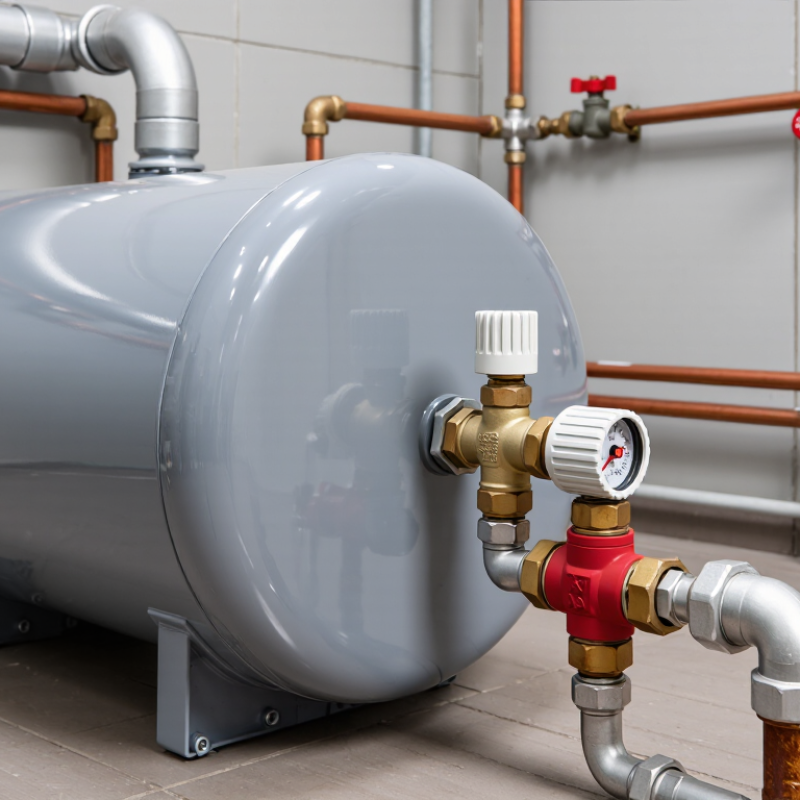
Look closely at a typical installation. The valve sits near the top of a water heater or boiler, where temperature is highest. Its discharge pipe should point downward and end in a visible, safe location. A missing pipe, blocked outlet, or corroded valve deserves immediate attention from a qualified professional. Small details matter here.
A temperature and pressure relief valve is not a substitute for proper system design. It cannot correct every fault. It can also fail. That uncomfortable fact is worth remembering. Regular professional inspection, correct sizing, and replacement after damage support reliable protection. Manufacturer instructions and applicable plumbing standards should guide the work. This article explains how the valve operates, what warning signs to notice, and why ignoring a simple component can create a serious risk.
Why Do You Need a Temperature and Pressure Relief Valve?
A temperature and pressure relief valve protects a water heater when conditions become unsafe. Many residential valves are rated to open at 210°F or 150 psi. These limits matter because overheated water can create steam, while excessive pressure can stress the tank, fittings, and connections. The valve responds when either limit is reached. Both conditions do not need to occur together.
At 210°F, water can cause severe scalding within seconds. At 150 psi, stored energy can forcefully damage equipment if pressure cannot escape. The valve releases hot water through a discharge pipe, reducing pressure and temperature before the tank becomes more dangerous. That pipe needs proper sizing, a downward path, and a safe termination point. It should never be capped, plugged, or routed where someone could be burned.
A valve can look clean and still fail to operate correctly. Sediment, corrosion, or an obstructed outlet may remain hidden. Maintenance staff should follow the heater and valve manufacturer’s instructions, including safe inspection procedures. A brief test is not harmless if discharge water is hot. Professional evaluation is wise when the valve leaks, opens repeatedly, or lacks a visible discharge pipe. The weak point is often installation, not the valve itself. That detail deserves a closer look.
Inside a storage water heater, cold water expands as it absorbs heat. From 60°F to 140°F, water volume increases by roughly 1.7%, based on thermal-property data in the ASHRAE Handbook—Fundamentals. That extra volume needs somewhere to go. In a closed plumbing system, a check valve or backflow preventer can trap it inside the tank. Pressure then rises between heating cycles, sometimes without visible warning. The U.S. Department of Energy reports that water heating uses about 18% of household energy, so this cycle may occur several times daily.
Heat creates a second hazard. A failed thermostat, damaged control, or poor adjustment can allow temperatures to climb beyond normal operating levels. Many residential heaters use relief valves commonly rated near 210°F and 150 psi, consistent with requirements referenced by ASME Section IV and plumbing codes. When either limit is reached, the valve opens and releases hot water or steam. It is a last line of defense.
The discharge pipe matters. It must direct water safely downward and remain unobstructed. Never cap it.
In field inspections, a quiet valve is not always a healthy valve. Mineral deposits can restrict movement, while a leaking valve may signal repeated thermal expansion. This is where routine checks become imperfect but useful. A qualified technician should verify the valve, expansion control, temperature setting, and discharge path together. Testing only one part can miss the real pressure problem.
A temperature and pressure relief valve protects a water heater when heat or pressure rises beyond safe limits. It usually remains closed, holding water inside the tank. A spring-loaded mechanism responds to pressure, while a temperature sensor reacts to excessive heat. Either condition can open the valve.
When the valve opens, hot water escapes through the discharge pipe. If the water is near boiling, some may become steam and expand rapidly. This release lowers pressure inside the tank and removes stored heat. The flow can be sudden, loud, and dangerous. Never place hands near the outlet.
During routine maintenance, technicians check that the discharge pipe points downward and remains unobstructed. They may briefly lift the test lever, allowing water to flow. The valve should close afterward without continuous dripping. A leaking valve needs professional evaluation, not a blocked outlet or improvised plug.
The exact activation settings depend on the equipment design and installation requirements. Many residential valves use common pressure and temperature limits, but those values should never be assumed blindly. A valve can look clean and still fail internally. That is the part worth questioning. Regular inspection, correct replacement, and a clear discharge path help the valve perform its single critical task: releasing excess heat, pressure, and water before the tank becomes dangerously stressed.
A temperature and pressure relief valve protects a water-heating system from dangerous pressure or overheating. The U.S. Energy Information Administration’s 2020 Residential Energy Consumption Survey reports that water heating used about 17% of household energy. That demand also creates stored thermal energy. A failed control, blocked outlet, or excessive firing condition can turn that energy into a serious hazard.
ASME Boiler and Pressure Vessel Code Section IV may govern the design, rating, and certification of relief valves used with certain heating equipment. The valve must match the heater’s pressure and temperature limits. ANSI Z21.22 addresses relief valves and automatic gas shutoff devices for hot-water supply systems. It also supports evaluation of performance, materials, and operating conditions.
Local plumbing and mechanical codes still control the installation. They commonly address valve accessibility, discharge-pipe sizing, approved materials, termination, and drainage. The authority having jurisdiction may require additional clearances or inspection steps.
Never install a shutoff valve between the relief valve and the tank. Do not cap the discharge line.
The small details matter. A discharge pipe ending above a floor drain may spray scalding water onto nearby occupants. A missing air gap or poorly supported pipe can create another failure point. Field inspections often find documentation gaps, even when the equipment appears correct. Code editions change, and local amendments are easy to overlook. Verify the current ASME requirements, ANSI Z21.22 listing, manufacturer instructions, and local code before installation.
A temperature and pressure relief valve protects a water heater from dangerous overpressure and overheating. The U.S. Consumer Product Safety Commission has cited more than 3,000 tap-water scald injuries annually. That figure makes routine valve care more than a maintenance detail. It is a safety control.
Inspect the valve and discharge pipe at least yearly, following the heater manufacturer’s instructions. Look for corrosion, mineral deposits, leakage, missing threads, or a blocked outlet. The pipe should terminate safely and remain unobstructed. Before testing, shut off the energy source, keep people away from the outlet, and allow the water to cool. Lift the test lever briefly only when the valve and discharge path appear sound. Hot water may release quickly. A valve that fails to reseat, drips continuously, or shows heavy corrosion needs replacement, not repeated handling.
Use a replacement valve with matching temperature and pressure ratings, and select a product certified to applicable requirements such as ANSI Z21.22 or CSA 4.4. Never cap, plug, or reduce the discharge line. Do not install a shutoff valve between the heater and relief valve. ASME’s boiler and pressure-vessel standards emphasize properly rated, functional relief protection, yet field inspections often reveal incorrect fittings or missing pipes. That is an avoidable error. If the valve has operated, the heater overheated, or the installation is uncertain, a licensed professional should verify the system before recommissioning it.
| Topic | Verified Information | Recommended Action | Safety Requirement |
|---|---|---|---|
| Purpose | A temperature and pressure relief valve, commonly called a T&P valve, protects a storage water heater from excessive water temperature and pressure. | Keep the valve installed, unobstructed, and connected to a properly routed discharge pipe. | Never remove, cap, plug, or isolate the valve from the water heater. |
| Typical residential ratings | Many residential storage water heaters use a valve rated at 210°F (99°C) and 150 psi (approximately 1,034 kPa), but the correct rating depends on the water heater nameplate and installation requirements. | Confirm the replacement valve has the same temperature and pressure ratings specified for the heater. | Do not select a valve solely by pipe size or appearance. |
| Why overheating is dangerous | Water heated above its normal operating range can cause scalding and can generate steam. Rapid steam expansion may create a severe rupture hazard if safety controls fail. | Keep the heater temperature control within the manufacturer’s recommended range and correct any overheating condition immediately. | Stay clear of the discharge outlet while inspecting or testing the valve. |
| Initial visual inspection | Check for corrosion, mineral deposits, leakage, physical damage, a missing lever, or a discharge pipe that is loose, capped, blocked, or incorrectly routed. | Inspect the valve and discharge piping during routine water-heater maintenance and after any plumbing alteration. | Do not touch the valve or discharge water with bare hands; components may be hot. |
| Discharge pipe requirements | The pipe should be corrosion-resistant, properly supported, and installed so that discharge cannot be blocked or trapped. It should terminate in a safe, visible location according to local requirements. | Verify that the outlet is open and that the pipe slopes or drains as required by the applicable installation code. | Never install a shutoff valve, cap, screen, plug, or reducing fitting that can restrict discharge. |
| Before testing | A manual test lifts the valve seat and may release hot water under pressure. Testing a weakened or corroded valve can cause leakage or failure. | Read the water-heater and valve instructions, warn occupants, keep children away, and identify a safe drainage path before testing. | Do not test a damaged valve or place any part of your body over the outlet. |
| Manual test method | Briefly lift the test lever only as directed by the manufacturer, then release it fully. Water should flow during the test and stop when the lever is released. | Observe the discharge for a short period and check that the valve reseats without continuous dripping. | Never force, tie open, tape, or hold the lever in the open position. |
| Test result: normal | A short discharge followed by complete shutoff generally indicates that the valve reseated during the manual test. | Check the outlet again after the water heater returns to normal operation. | A normal manual test does not prove that the valve will open at its exact rated temperature or pressure; specialist testing is required for that verification. |
| Test result: continuous dripping | Persistent leakage may be caused by debris on the seat, a worn valve, excessive system pressure, thermal expansion, or an overheating condition. | Do not plug the outlet. Have a qualified professional diagnose the cause and replace the valve if it does not reseat. | If discharge is forceful, unusually hot, or continuous, keep clear and shut down the energy source only if it can be done safely. |
| When replacement is appropriate | Replacement is appropriate when the valve leaks after testing, shows corrosion or damage, fails to operate correctly, has an uncertain history, or is not compatible with the heater. | Use a new, code-compliant valve with matching temperature, pressure, connection, and material specifications. | Do not reuse an old relief valve or install a valve with a higher rating than permitted by the heater. |
| Preparation for replacement | The heater must be isolated from energy and water pressure, and the water level must be lowered below the valve connection before removal. | Turn off the appropriate gas control or electrical supply, close the cold-water inlet, allow the heater to cool, and drain carefully as directed by the manufacturer. | For gas heaters, do not disturb gas piping. For electric heaters, prevent accidental re-energizing while the tank is drained. |
| Installation of the new valve | The valve must be installed in the designated opening, oriented as instructed, and sealed only with an approved method compatible with the connection and valve materials. | Install the discharge pipe after the valve is secured, keeping the outlet unobstructed and directing it to a safe termination point. | Do not use the valve lever as a wrench, over-tighten the fitting, or apply sealant where the manufacturer prohibits it. |
| Return to service | The tank must be completely full of water before an electric heating element is energized. Air trapped in the tank can damage an element. | Open a hot-water tap while filling, confirm a steady water flow, inspect all connections for leaks, and restore energy according to the manufacturer’s instructions. | Never energize an electric water heater while the tank is empty or only partially filled. |
| Pressure-related problems | Thermal expansion in a closed plumbing system can cause pressure increases and intermittent discharge even when the heater is operating normally. | Have a qualified professional measure system pressure and evaluate whether an approved thermal-expansion control device is required. | Never solve pressure discharge by blocking or replacing the relief valve with an incorrectly rated device. |
| Inspection frequency | Inspection and testing intervals vary by manufacturer instructions, local regulations, water quality, and equipment condition. | Review the heater and valve instructions and arrange periodic inspection by a qualified professional where required. | Replace immediately when the valve is damaged, fails to reseat, or shows signs of unsafe operation; do not rely on a fixed universal service life. |
| Emergency response | Strong discharge, steam, unusual noises, a ruptured tank, or uncontrolled overheating indicates a potentially dangerous condition. | Keep people away, contact emergency services when necessary, and call a licensed plumbing or heating professional. | Do not approach a violently discharging valve or attempt an emergency repair while the system is hot or pressurized. |