Choosing a temperature and pressure relief valve in 2026 requires more than comparing connection sizes or catalog prices. Engineers must examine heat sources, pressure changes, fluid characteristics, discharge routing, maintenance access, and failure consequences. A valve that performs well on a domestic water heater may be unsuitable for steam, thermal oil, or process equipment.
Marc Hellemans, author of The Safety Relief Valve Handbook, offers a practical warning: “A relief valve protects the system only when its capacity, set pressure, and installation are correct.” That principle remains highly relevant. Small installation errors can create serious protection gaps. A blocked outlet. An incorrect spring range. A poorly positioned sensor.
This guide examines the leading temperature and pressure relief valve types expected to matter in 2026, including spring-loaded, pilot-operated, thermostatic, combination, and electrically assisted designs. It compares their operating principles, response behavior, materials, pressure ratings, and typical applications. The discussion also considers inspection requirements and alignment with recognized engineering standards, such as ASME, API, and EN frameworks.
No single valve suits every system. That assumption can fail.
Real-world selection often involves compromise. Fast response may reduce adjustment flexibility. Compact designs may complicate servicing. Smart monitoring can improve visibility, but it does not replace mechanical protection. Product data must be verified against the actual installation, not copied from a similar project. The safest choice is the one supported by calculations, qualified review, reliable documentation, and a clear maintenance plan.
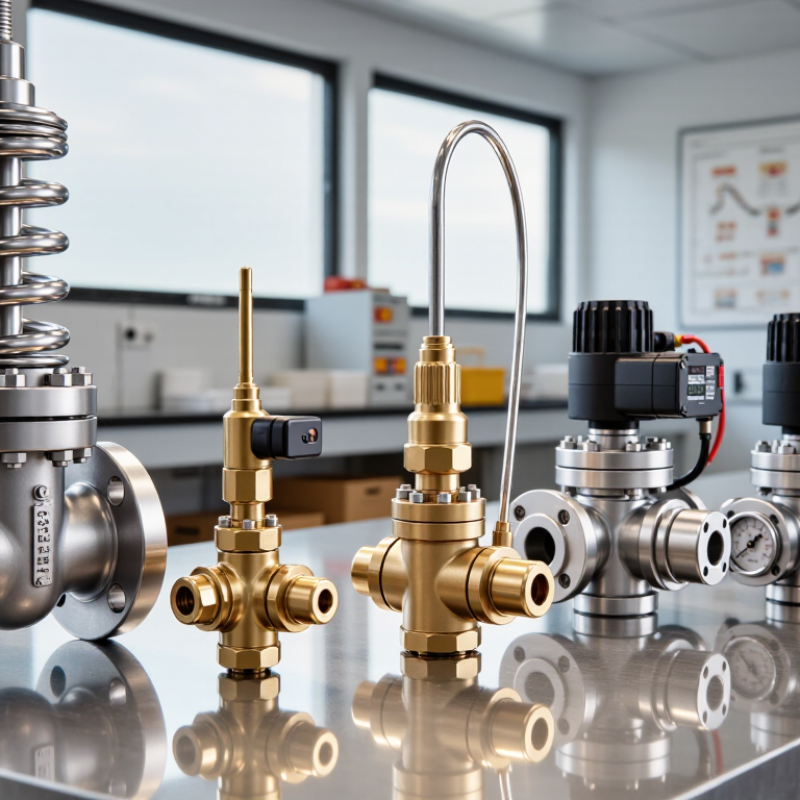
A temperature and pressure relief valve, or T&P valve, protects a closed water-heating vessel. It opens when excessive heat or pressure threatens the tank. The valve then releases hot water, steam, or both through a discharge pipe. This simple action can prevent tank rupture. It is not a control valve, drain valve, or routine pressure regulator.
Common designs include combination T&P valves, pressure-only valves, and temperature-only valves. Domestic storage heaters often use settings near 210°F and 150 psi, but these values are not universal. The correct setting depends on the vessel, installation standard, and local code.
ASME Boiler and Pressure Vessel Code Section IV addresses safety requirements for heating boilers. ANSI Z21.22 covers relief valves for water-heating equipment. The U.S. Department of Energy’s Energy Saver guidance reports that water heating represents about 18% of household energy use, making reliable protection especially important.
Tips:
Check the valve’s label before replacement. Never cap, plug, or reduce the discharge pipe. Keep the outlet visible and directed toward a safe drain. During field inspections, I look for corrosion, leakage, blocked piping, and missing insulation. A valve that never opens may still be defective. Testing can also expose a weak seal, so professional assessment is wise. I admit one limitation: a visual check cannot confirm the valve’s full response temperature or pressure. Follow the manufacturer’s instructions and use a qualified technician when uncertainty remains.
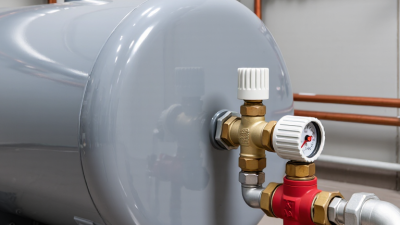
Temperature and pressure relief valves protect equipment when heat or pressure exceeds a safe limit. Their operation is mechanical, not mysterious. A spring-loaded valve stays closed while system pressure remains below its set pressure. When pressure pushes harder than the spring force, the disc lifts. Fluid escapes through the outlet. After pressure falls, the disc reseats, although imperfect sealing can occur if dirt damages the seat.
Temperature and pressure relief valves respond to two different risks. A thermal relief valve releases expanding liquid in blocked pipe sections. A temperature-pressure valve combines a temperature probe with pressure sensing, commonly in heated water systems. Pilot-operated valves suit large, high-pressure equipment because a small pilot controls the main valve. Fortune Business Insights estimated the global industrial valve market at about USD 78.7 billion in 2023, showing the scale of equipment requiring dependable protection. API 520 and ASME Section VIII provide widely used sizing and installation principles, but field conditions still demand engineering judgment.
Tips: Confirm the set pressure, discharge route, and operating temperature. Check calibration records. Never isolate a relief valve without an approved protection plan. A technician should inspect corrosion, vibration, and blocked outlets during maintenance. The 2024 State of Operational Technology and Cybersecurity Report reported that many industrial sites still struggle with aging assets and incomplete visibility. That matters here: a valve may look clean outside yet fail internally. Do not trust appearance alone. Record lift history, test results, and the reason for every adjustment.
In 2026, temperature and pressure relief valve selection remains application-driven.
Each valve responds to a different hazard.
A pressure relief valve opens when system pressure exceeds its calibrated set point. It suits boilers, pipelines, and closed water circuits.
A safety valve handles steam or gas and usually opens rapidly. Its quick lift helps prevent dangerous pressure accumulation. These valves require accurate sizing, correct materials, and regular functional checks.
A temperature and pressure relief valve combines two sensing functions. It releases water when pressure rises too high or temperature becomes unsafe. Storage water heaters commonly use this design.
The valve should discharge through a visible, properly supported pipe. Never block or cap that outlet.
A thermal relief valve protects liquid-filled sections from pressure caused by heat expansion. It is useful between isolation valves, where trapped fluid has little room to expand.
Vacuum relief valves address negative pressure, although they do not replace pressure or temperature protection.
Field inspections often reveal an overlooked detail: a correctly rated valve can still perform poorly with a blocked outlet or mineral buildup.
Installation position, discharge routing, set pressure, and temperature rating all matter.
Local codes and the equipment maker’s instructions must guide final selection.
No valve is perfect. Corrosion, testing gaps, and incorrect assumptions still deserve attention.
2026 Top Temperature and Pressure Relief Valve Types?
How to Choose the Right Relief Valve
Choosing a relief valve starts with the process, not the catalog. Record the normal pressure, maximum allowable pressure, operating temperature, and fluid condition. Note whether the fluid is liquid, gas, steam, corrosive, or likely to crystallize. Small details matter. A clean-looking line can still contain damaging pressure spikes.
Spring-loaded valves suit many conventional systems and offer a straightforward design. Pilot-operated valves can provide tighter control in larger or fluctuating systems. Thermal relief valves protect blocked-in liquid sections from heat expansion. Temperature and pressure relief valves combine both functions, which can help in water-heating equipment. Each type has limits. A familiar valve is not automatically the right valve.
Check the required set pressure against the vessel rating and applicable engineering standards. Then confirm capacity, connection size, materials, discharge direction, and service temperature. Ask whether the valve can be tested and maintained safely after installation. Installation errors are surprisingly common, especially restricted discharge piping and incorrect orientation. The valve may be certified, yet the system can still be poorly protected.
Reliable selection depends on verified calculations and current technical documentation. Do not guess the relief load. A qualified engineer should review unusual fluids, fire exposure, rapid gas generation, or multiple connected vessels. One practical lesson deserves attention: “standard” conditions rarely remain standard for long. Review assumptions before approving the final valve.
| Valve Type | Primary Protection Function | Operating Principle | Typical Applications | Temperature Considerations | Pressure Considerations | Key Advantages | Main Limitations | Best Selection Criteria |
|---|---|---|---|---|---|---|---|---|
| Spring-Loaded Safety Valve | Rapid overpressure protection for compressible fluids such as steam and gas. | A spring holds the disc closed until system pressure reaches the set pressure; the valve then opens to discharge fluid. | Boilers, steam systems, gas vessels, compressors, and process equipment. | Select materials, seals, and spring components for the minimum and maximum design temperatures. Steam service may require corrosion- and heat-resistant trim. | Set pressure must not exceed the protected equipment’s allowable pressure. Capacity must be sufficient for the credible relief scenario. | Fast response, compact construction, and no external power requirement. | Back pressure, fouling, vibration, and incorrect installation can affect performance. | Choose when rapid gas or steam relief, compact size, and a direct-acting design are required. |
| Pressure Relief Valve | Controlled pressure reduction in liquid or process-fluid systems. | The valve opens at a defined pressure and modulates or relieves flow to prevent pressure from exceeding the permitted limit. | Pumps, piping, hydraulic systems, liquid storage, and process lines. | Verify body, trim, gasket, and elastomer ratings for the full fluid temperature range. | Liquid relief sizing depends on flow rate, set pressure, allowable accumulation, inlet losses, and discharge back pressure. | Well suited to liquid service and pressure control where stable modulation is important. | Incorrect sizing may cause chattering, inadequate capacity, or excessive pressure loss. | Choose after defining fluid phase, required relieving flow, set pressure, and downstream discharge conditions. |
| Safety Relief Valve | Overpressure protection for systems that may contain either liquid or compressible fluids. | A spring-loaded mechanism opens at the set pressure and can provide either pop action or modulating relief, depending on design. | General process plants, pressure vessels, thermal-fluid systems, and mixed-phase service. | Confirm that the pressure-containing materials and soft parts are compatible with both normal and relieving temperatures. | The valve must be rated for the required set pressure, relieving capacity, allowable overpressure, and built-up or superimposed back pressure. | Versatile option for many industrial services and pressure-vessel applications. | A single general-purpose design may not be suitable for severe fouling, corrosive fluids, or unstable flow. | Choose when the system can experience liquid, vapor, gas, or changing phases and one relief device must cover the service. |
| Pilot-Operated Relief Valve | High-capacity pressure protection with accurate control near the set pressure. | A small pilot valve controls pressure in the main valve dome, allowing system pressure to hold the main disc closed until relief is required. | Large gas pipelines, high-capacity vessels, storage facilities, and applications with operating pressure close to set pressure. | Pilot sensing lines and small passages must remain suitable for low-temperature, high-temperature, hydrate-forming, or viscous service. | Offers high flow capacity and can tolerate a narrow operating margin below set pressure, subject to the specific design. | Large capacity, reduced simmering, and improved pressure control in suitable clean-fluid applications. | More complex, more dependent on clean impulse lines, and potentially more demanding to maintain. | Choose for high flow rates, limited installation space, or systems that operate close to the set pressure. |
| Thermal Relief Valve | Protection against pressure rise caused by liquid thermal expansion in a blocked-in section. | A small relief device opens when the trapped liquid expands and pressure reaches the valve set point. | Blocked-in liquid pipelines, heat exchangers, jacketed lines, pump discharge sections, and cryogenic or hot-liquid systems. | Temperature increase and fluid expansion coefficient are central to sizing. Materials and seals must withstand the full temperature range. | Usually sized for the relatively small flow caused by thermal expansion, not for fire exposure or a major process upset unless specifically engineered. | Simple and effective protection for isolated liquid volumes. | It does not replace a full-capacity safety valve for vapor generation, fire exposure, or large process overpressure events. | Choose when a liquid-filled section can be isolated and heated without an expansion path. |
| Vacuum Relief Valve | Protection against excessive vacuum or negative pressure. | The valve admits air or another compatible gas when internal pressure falls below the vacuum set point. | Atmospheric tanks, storage vessels, low-pressure systems, and equipment subject to draining, cooling, or condensation. | Consider condensation, freezing, hot vapor collapse, and the temperature rating of the body, seat, and seals. | Set point is based on allowable external pressure or vacuum rating of the vessel, not only on normal operating pressure. | Prevents tank collapse and can reduce unnecessary structural reinforcement. | It protects against vacuum and does not provide positive-pressure relief unless a combined design is used. | Choose when the vessel may be emptied, cooled, condensed, or isolated while exposed to atmospheric pressure. |
| Temperature and Pressure Relief Valve | Combined protection against excessive temperature and excessive pressure in water-heating systems. | A pressure-sensing mechanism opens at the pressure set point, while a temperature element opens when the specified temperature limit is reached. | Domestic hot-water storage heaters, water heating equipment, and selected low-pressure hot-water systems. | The temperature rating and temperature set point must match the heater design and applicable installation requirements. | Pressure set point must remain within the vessel’s permitted working pressure and applicable code requirements. | Provides two protective functions in one compact device. | Not a universal substitute for industrial process relief systems or separately engineered fire-case protection. | Choose for compatible water-heating equipment after checking the vessel rating, connection size, discharge route, and local code. |
2026 Top Temperature and Pressure Relief Valve Types?
Temperature and pressure relief valves protect boilers, water heaters, compressors, and process vessels from unsafe operating conditions. Spring-loaded pressure relief valves suit many fixed systems. Pilot-operated designs handle larger flows and tighter pressure control. Temperature and pressure relief valves are common in storage tanks and hot-water equipment. Their function is simple, but selection requires careful engineering.
Applications determine maintenance needs. In a boiler room, technicians should check discharge piping, valve lifting mechanisms, and nearby corrosion. Thermal relief valves on blocked-in liquid lines need attention when fluid expansion can increase pressure. Inspectors should verify the set pressure against current system documents. A valve should never discharge into a walkway or enclosed room.
Maintenance records matter. Each inspection should include the date, valve identification, set pressure, condition, and corrective action. Test the valve according to the equipment manufacturer’s procedure and applicable safety standards. Never paint, plug, or obstruct the outlet. Sediment can prevent proper seating, especially in hard-water environments. Cleaning may help, but damaged seats usually require qualified repair or replacement. In practice, schedules are sometimes missed during busy shutdowns. That is a weakness worth acknowledging. A short visual check can still reveal leakage, rust, blocked drains, or tampering. Keep the findings specific. Vague notes create avoidable risks during the next inspection.
Common applications and representative maintenance review intervals used in process, power, HVAC, and industrial systems.
Spring-loaded and pilot-operated valves are commonly used for overpressure protection in vessels, pipelines, boilers, and process systems. Rupture disks provide non-reclosing protection, while thermal relief valves protect blocked-in liquid sections from thermal expansion. Vacuum relief valves protect tanks and low-pressure equipment from collapse. The intervals shown are representative engineering review practices, not universal code requirements; actual inspection and testing frequency must follow applicable regulations, service conditions, manufacturer instructions, and site procedures.